Funchal in two days is enough time to understand the city if you do not turn every hour into an attraction. The centre is compact on a map, yet its slopes, cobbles and changing weather make it tiring when you zigzag without purpose. Use one day for the city at street level and one for Monte above it. Leave open spaces for coffee, rain, or the simple pleasure of sitting by the harbour.
Make the first evening in Zona Velha count
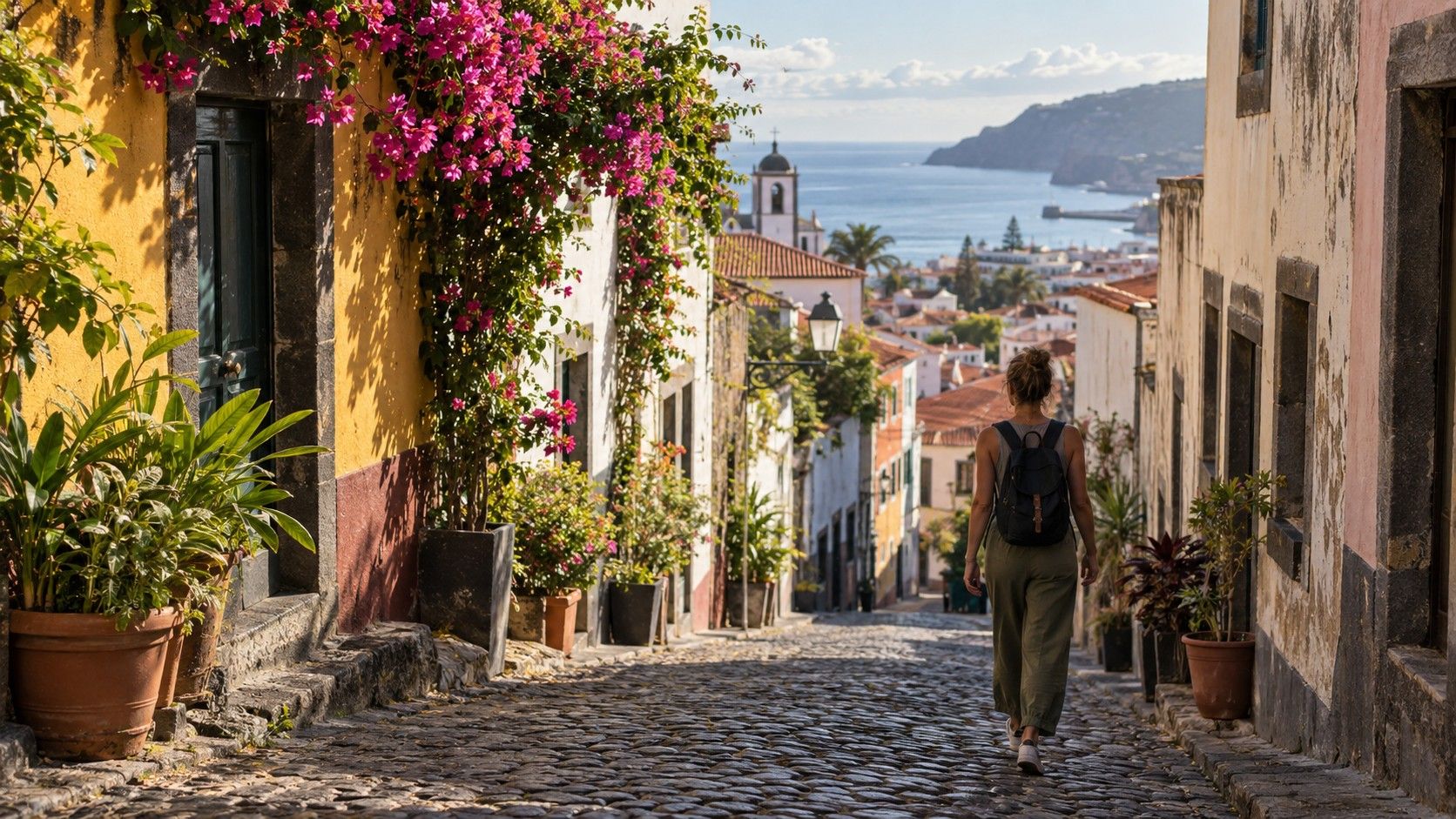
Zona Velha is a good first destination because it introduces Funchal without an early schedule. Walk from the Funchal Marina toward Santa Maria Street while there is daylight. You will notice the scale of the older lanes, the rise away from the water, and places that look worth returning to. At night the area becomes busier, so seeing it twice in one evening gives a more useful impression than arriving only for dinner.
Do not rush into the first restaurant named in a guide. Walk one or two blocks, read a menu, and decide whether you want a full meal or something light before another stroll. The old town evenings are better when you keep them close to your accommodation and accept a quiet end if travel has caught up with you. A long walk uphill is less charming after a late meal.
Keep the waterfront for the softer part of the evening. The marina is good for a slow loop, a bench, or working out where you might begin tomorrow. It also gives you a flat route after uneven lanes. That alternation between old stones and open water is a small but useful way to save your legs.
Give Monte a morning and a generous time buffer
Monte changes the view of the city, and the cable car makes it accessible without a long climb. Go in the morning when you can tolerate a queue, orient yourself at the top, and walk without checking the clock every ten minutes. Cable car timing is less about catching the earliest cabin than about allowing for weather, tickets, toilets and a companion who needs a slower start.
Once there, choose one garden or viewpoint rather than making the hill an endurance test. Monte has slopes even after the ride, and a pleasant hour can become a weary afternoon if you keep adding nearby stops. Carry water and a light layer; the breeze above the centre can feel cool after a warm walk. Rest before deciding how to descend, because tired legs make every option seem worse.
Returning by cable car is a good decision, not a missed experience. Walking down suits people comfortable with steep streets and uneven surfaces, but it can eat into the old-town evening you wanted. A short Funchal itinerary should protect the parts of the day you care about instead of rewarding the longest route.
Visit Mercado dos Lavradores with realistic expectations
Mercado dos Lavradores works best as a short morning stop. The produce, flowers and movement are interesting, and it gives the neighbourhood a clear centre. It works less well when you expect a silent local market or assume every offer is a bargain. Look around, ask before tasting, and let an enthusiastic seller remain a seller rather than the author of your afternoon.
After the market, take coffee nearby and decide what the next hours need. This can be the moment for a museum, an indoor pause, a waterfront walk or an ordinary practical errand. Those gaps make a city plan usable. If rain cover, a charger or a booking needs attention, sorting it now is more helpful than squeezing in another viewpoint.
| Part of the day | Best use | Energy-saving choice |
|---|---|---|
| First evening | Zona Velha, Santa Maria Street, dinner | Stay near the centre after dark |
| One morning | Monte and one garden or viewpoint | Use the cable car both ways if needed |
| Second afternoon | Market area, marina, flexible indoor stop | Choose one neighbourhood, not a dash |
Use transport before the hills use up your day
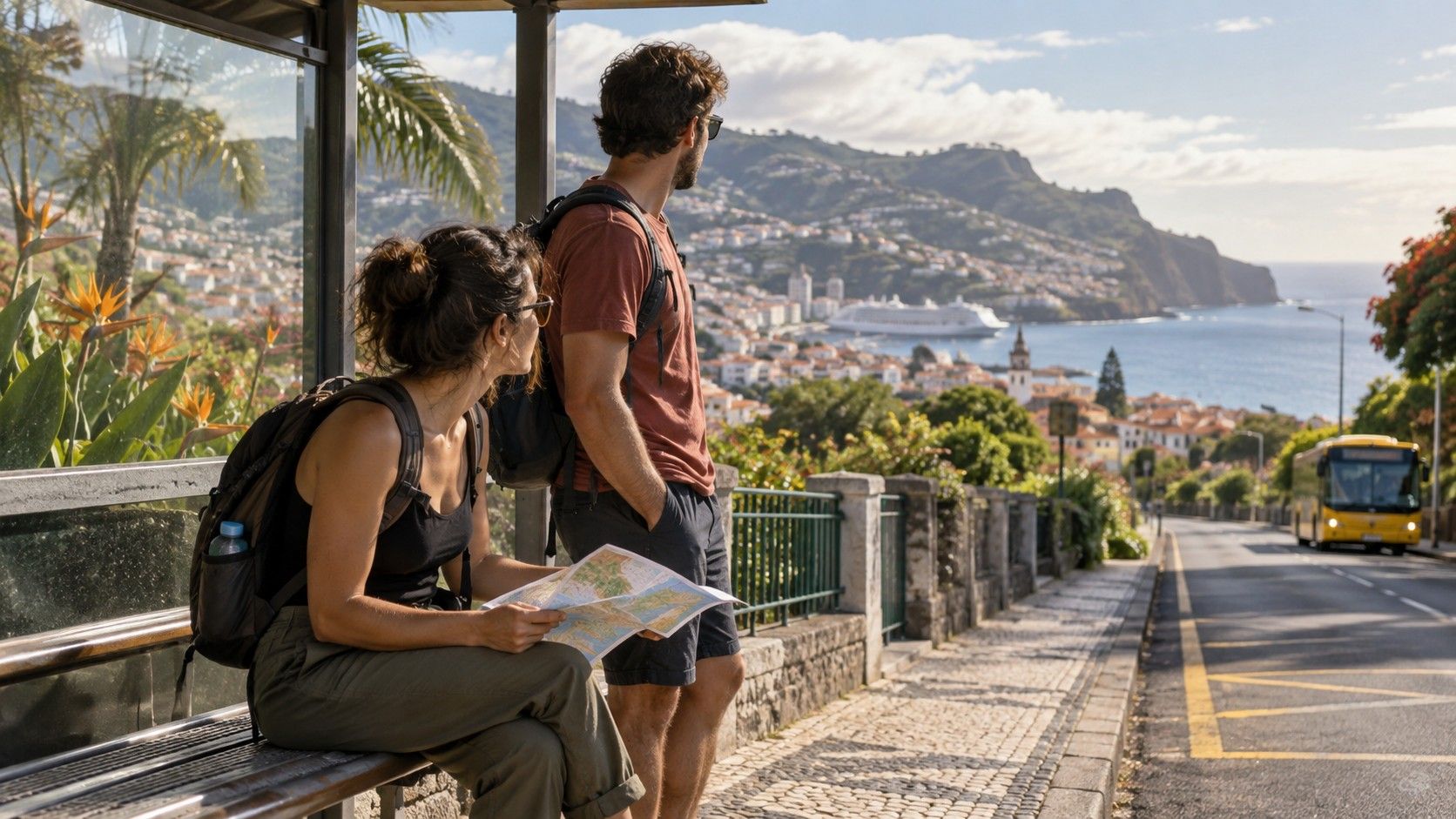
Funchal rewards wandering but punishes vague routes. A short line on a map can mean a steep ascent, and a tempting downhill detour still requires a climb back to your hotel. Check elevation before choosing a restaurant or afternoon stop. Taxis and buses are sensible for one awkward link in the day; using them gives you more city time, not less.
Carry water, sun protection and a light waterproof layer. Pavements and tiled surfaces become slippery in rain, while the harbour may remain bright when higher streets are damp. Put a real rest into each half-day: a long coffee, a bench at the marina, or an hour at your room. This prevents a concise visit becoming two days spent watching your step.
Accommodation makes this calculation visible. A hotel by the marina makes evening wandering easy; a room high above the centre may have a view but adds a climb after every meal. Neither choice is wrong. Learn one reliable way back, save a taxi number, and decide before nightfall whether walking home still sounds enjoyable.
Keep a rainy-day version ready
Rain does not cancel Funchal; it changes the order. Use wet hours for the market, an indoor visit, coffee or a long lunch, then walk the marina and old town when the pavement has dried. If Monte is clouded over, exchange it with the city-centre day and check again tomorrow. Flexibility is more useful than a fixed chain of bookings.
For the final morning, avoid inventing one last major sight. Revisit a street you liked, have breakfast without hurry, and leave time for packing or buying a small food gift. Funchal becomes memorable through lived-in corners: a table near the water, a steep lane at dusk, a view from Monte, and enough unplanned time to notice them.
Leave room for ordinary city logistics
Short breaks are often made harder by ordinary tasks that never appear in a headline: checking in, finding breakfast, buying rain cover, and learning where the nearest taxi rank is. Deal with these after the first old-town walk, when the centre is still fresh in your mind. A saved map, a charged phone and one dependable route between the marina and your accommodation remove a surprising amount of friction from the rest of the stay.
Choose each half-day around one neighbourhood. It is tempting to combine Monte, the market, the marina and a far-away dinner because they all look close on a screen. In practice each transition contains hills, queues, a search for a toilet, or the pause when somebody spots a view. Keeping one element optional gives the day a usable pace. If the morning in Monte runs long, have lunch nearby or descend without apologising to the rest of a list.
Accommodation changes the calculation too. A room beside the waterfront makes flat evening walks easy; a place higher above the centre may trade that convenience for a view. Neither choice is automatically better, but it is wise to test the return route in daylight. If it is steeper than expected, save a taxi number and budget for one easy ride rather than making the final climb an argument.
Use the second day to revisit, rather than collect
The strongest version of a two-day plan usually contains one repeat. Return to a café that felt good, walk the marina in different light, or go back through Zona Velha before the dinner crowd arrives. A second pass makes the city feel less like a transit lounge between island excursions. It also leaves a buffer if rain moved the order of the first day or the cable car morning took longer than expected.
On departure day, resist adding a major sight between breakfast and the airport. Pack calmly, pick up food gifts only if there is time, and leave room for traffic or a delayed check-out. Two days in Funchal do not need to prove that you saw everything. They work when the hilltop view, the market noise, the old-town evening and the waterfront each receive enough attention to become an actual memory.