Driving in Madeira is manageable for a calm, attentive driver, but the island exposes vague confidence very quickly. The main roads and tunnels can feel surprisingly straightforward; the final kilometre to a guesthouse, viewpoint or trailhead can be steep, narrow and full of blind corners. Rent a car because it suits your days, not because the island is small enough to make one seem automatic.
What Madeira driving actually feels like
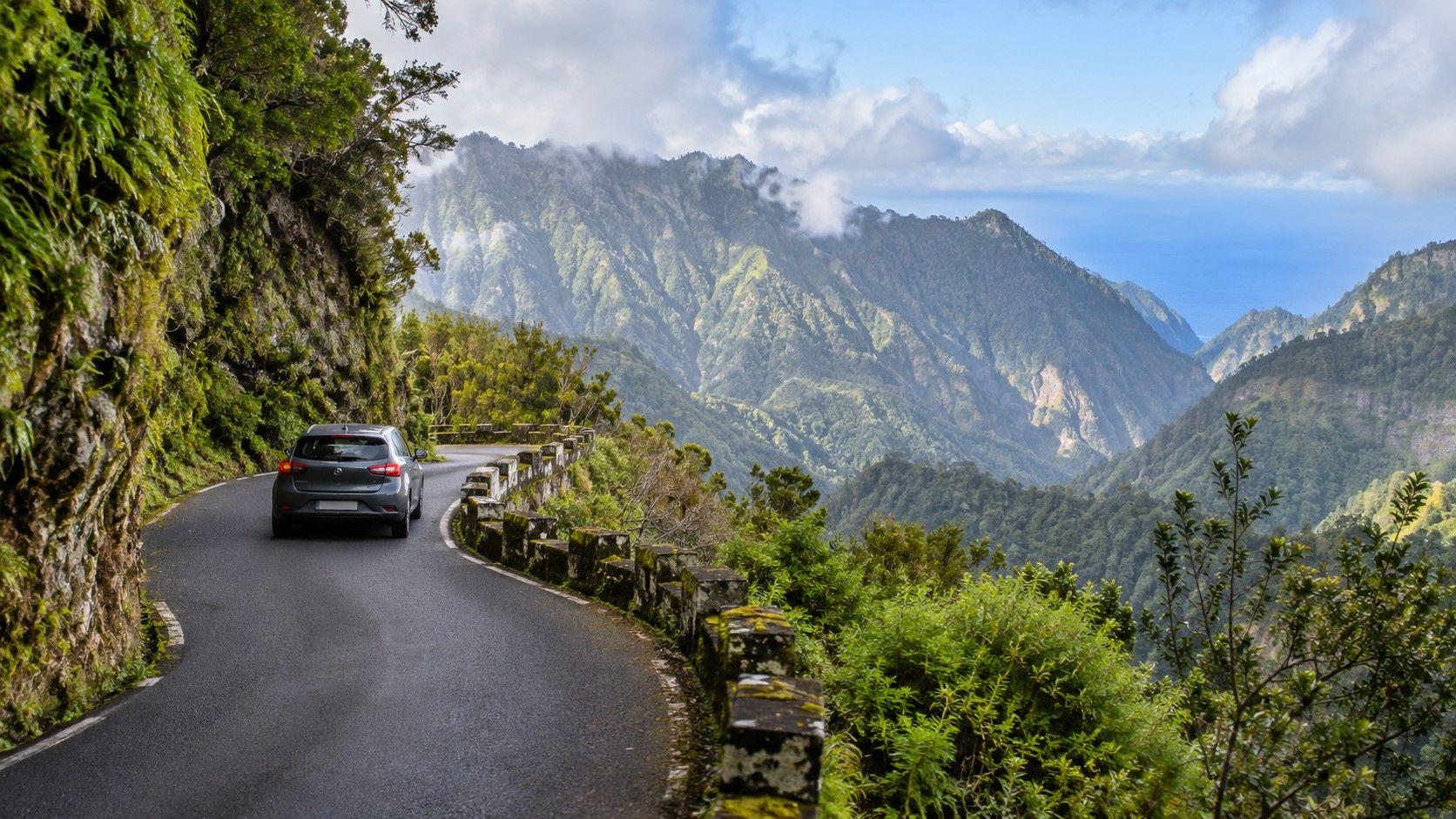
The first surprise is the contrast. VE roads and tunnels move efficiently around large parts of the coast, then a turn toward an old village sends you onto a lane where two cars negotiate by mirrors and patience. The road is not necessarily dangerous, but it requires a different pace. Let a local pass when there is room, use a lower gear on sustained descents, and do not treat an empty-looking bend as permission to drift wide.
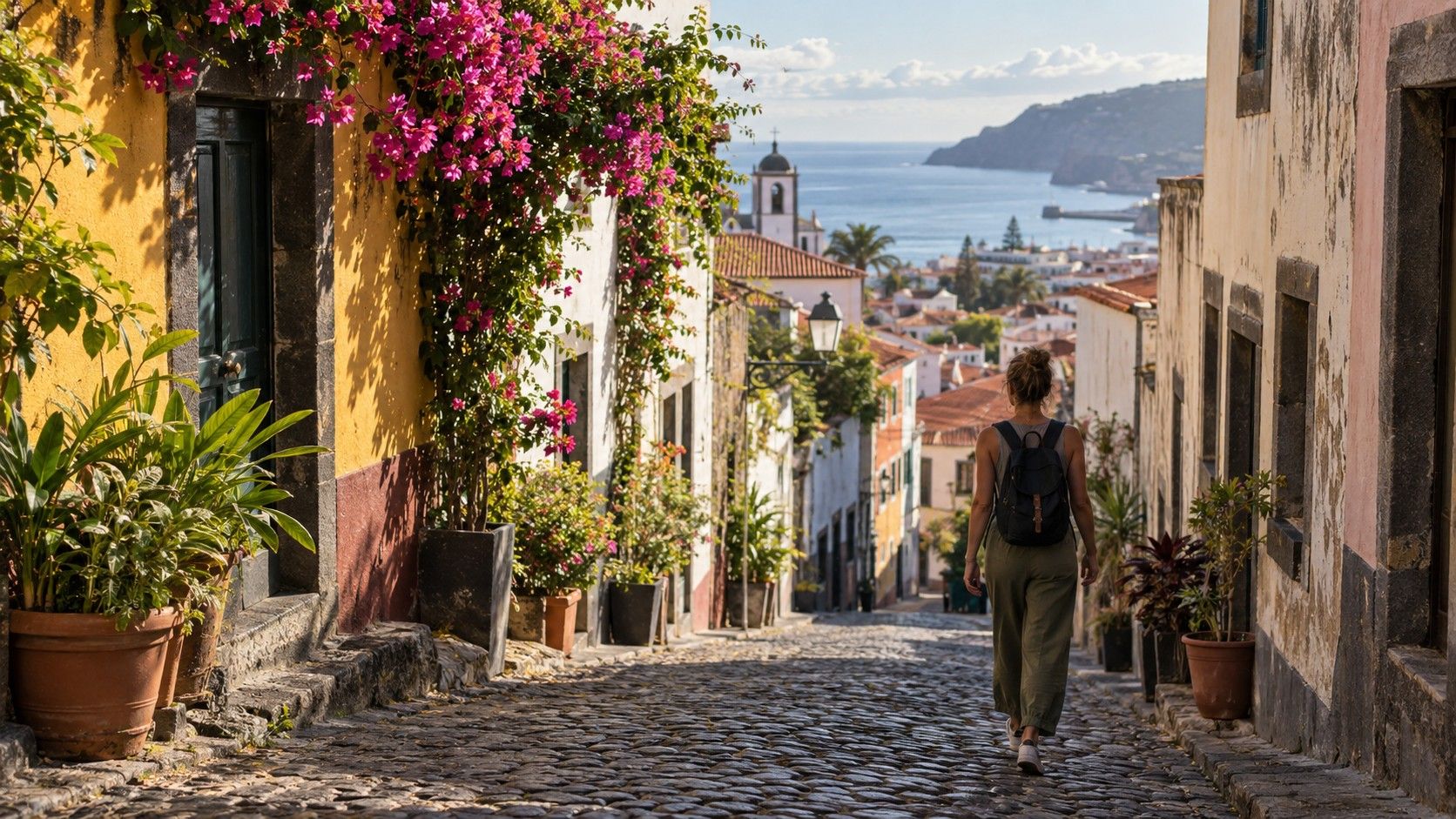
Steepness matters more than distance. A fifteen-minute route can include a climb that keeps the engine busy and a downhill approach where braking too late is tiring. Hill starts are common around Funchal, Ponta do Sol and hillside accommodation. If you are unused to them, an automatic transmission removes one source of friction. That is a practical choice, not an admission that the roads have defeated you.
Choose routes, not just destinations
A route to São Vicente can mean a tunnel-led crossing or an older mountain road with more views and more weather exposure. The same destination therefore carries two different days. Choose the fast route when your purpose is Porto Moniz, a trail or a timed reservation; choose the slower road only when you have daylight, clear conditions and the appetite to stop. A navigation app gives an arrival estimate, not a verdict on whether the drive will feel good.
Encumeada and the plateau can change character under cloud. A road that feels broad enough in sunshine can feel narrowed by mist, wind and spray. Keep an alternative coastal route in mind before leaving, especially if the plan includes a return after dark. The aim is not to avoid every mountain road. It is to avoid discovering your personal limit halfway up one, with another car waiting behind you.
Parking at towns and trailheads
Madeira parking is an ordinary part of the itinerary, not a last detail. In central Funchal, choose accommodation with confirmed parking if you intend to keep a car overnight; circling steep streets after dinner has little charm. At coastal towns, use marked spaces and allow time to walk rather than aiming for a space beside the exact viewpoint. In places such as Porto Moniz, arriving earlier turns parking from a contest into a small practical task.
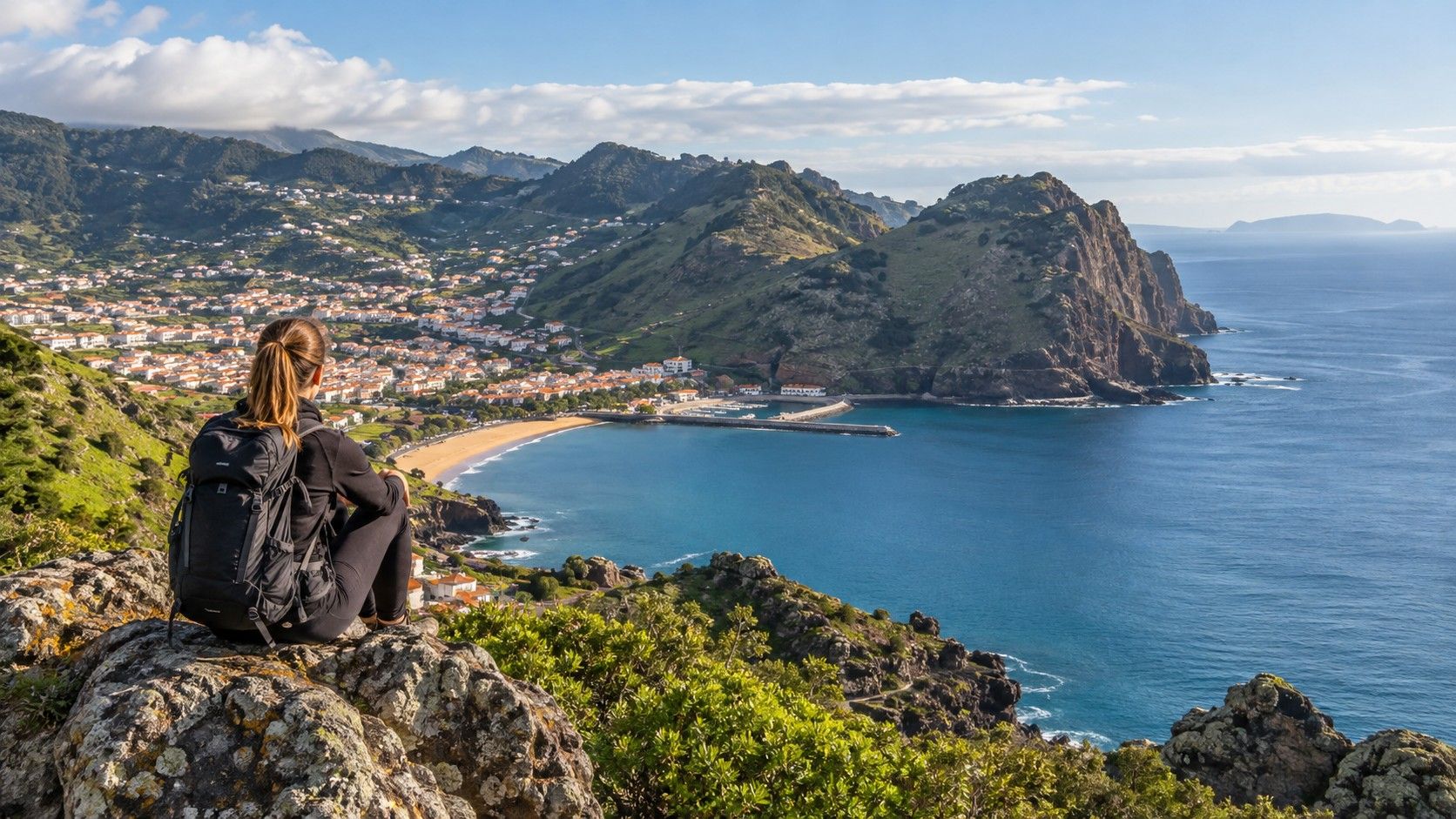
Trailhead parking needs more caution. Small lots fill quickly, cars can line a narrow access road, and a popular walk may not end at the same place it starts. Check that the walk is circular before leaving the car with your return plan still imaginary. Keep valuables out of sight, photograph the location if the approach is confusing, and avoid parking where another vehicle could be trapped. A view is never worth becoming the day’s obstruction.
| Situation | Best approach | Common bad call |
|---|---|---|
| Funchal accommodation | Confirm a usable on-site space | Assuming street parking is easy at night |
| West-coast day | Start early and keep stops selective | Adding every viewpoint to one route |
| Mountain road in cloud | Use a lower, coastal alternative | Pressing on because the plan says mountains |
| Levada trailhead | Check start, finish and return transport | Leaving the car at a one-way route |
When weather should change the plan
Cloud at Pico do Arieiro is not merely a disappointing photograph. Wind can reduce visibility and make a long drive feel tense before the walk begins. Look at conditions from a lower point, assess whether the cloud is moving, and be willing to trade the mountain for Funchal, Machico or a south-coast route. You have not lost a day; you have avoided turning it into a defensive drive with little reward.
Heavy rain changes more than a view. Drainage, wet leaves on a steep lane and slow vehicles all lengthen journeys. Give yourself an earlier turn-back time on a north-coast or mountain day, and do not build an evening meal reservation around an optimistic arrival. Madeira roads reward an unhurried driver. They punish a plan that treats weather as background decoration rather than a decision factor.
Who should skip the rental car
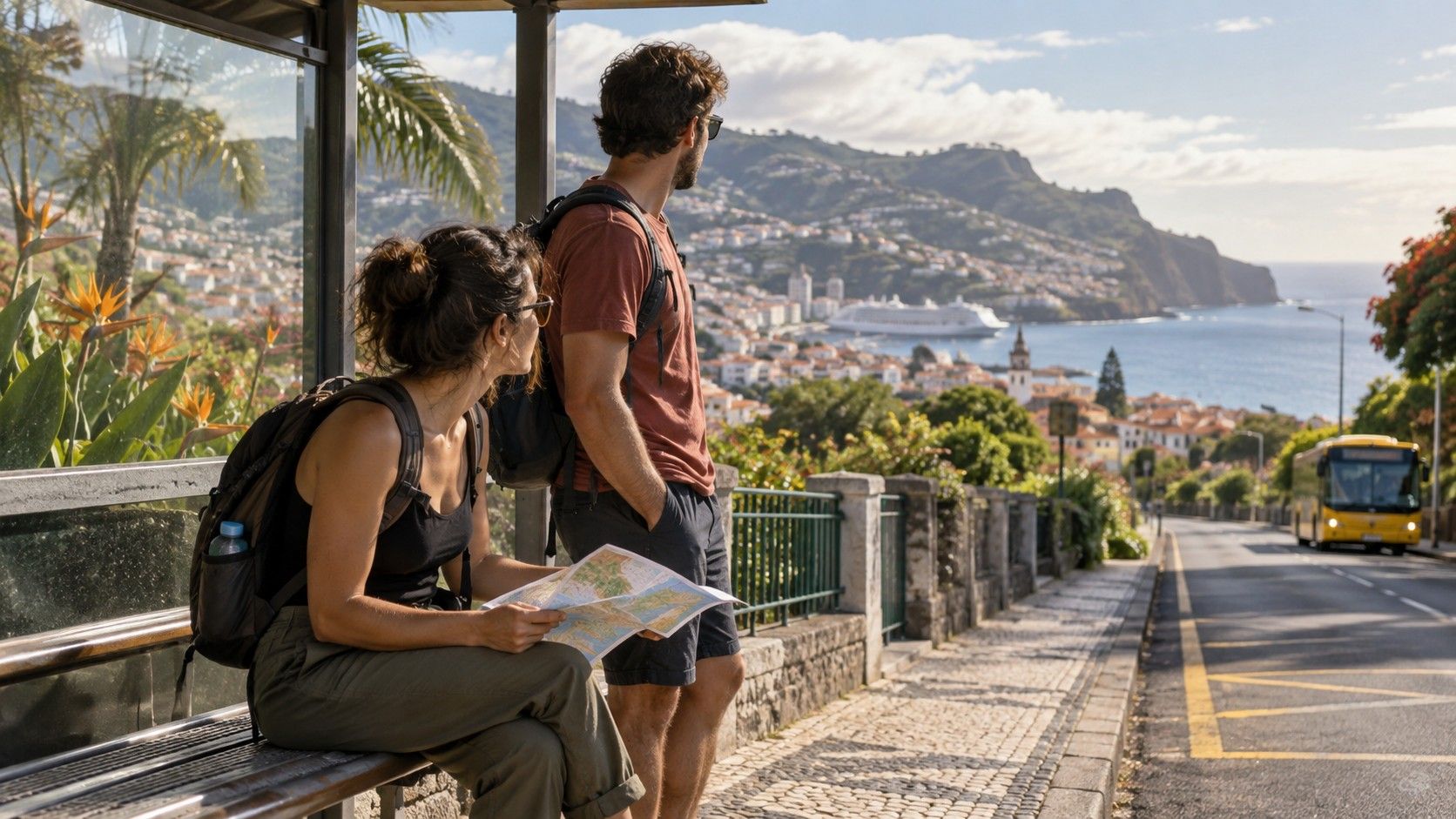
Skip it if the idea of a hill start with a car behind you will stay in your mind all holiday, or if the trip is mainly Funchal, Monte and a few guided excursions. A car parked at a central hotel becomes an expensive ornament if you dislike using it. Buses, tours and occasional transfers can provide a calmer holiday, particularly for a short visit where every driving day must earn its place.
Renting makes sense for travelers who want to start walks early, pause in small villages, and change coast when the weather changes. It helps most when paired with restraint: two substantial driving days can be enough for a five-day stay. The smart Madeira road decision is not ‘car or no car’ in the abstract. It is whether the car removes more friction from your particular itinerary than it adds at every steep junction and parking bay.
On the first morning, take a short low-pressure drive before attempting the mountains. Learn the mirrors, turning circle and feel of the brakes on an ordinary Funchal route, then work outward. Fill up before a long day, keep navigation audible rather than constantly in your hand, and accept a missed turn without sudden braking. Once the island’s road rhythm feels familiar, the car becomes a useful way to reach a quiet coast or trail, rather than a test you have to pass.
Parking and route choices become easier when the day has a firm stopping point. Set a time to begin the return, particularly from the north or the plateau, and treat it as part of the route rather than a failure of enthusiasm. Reaching the accommodation before tiredness has sharpened every bend is a better result than adding one more hurried stop.