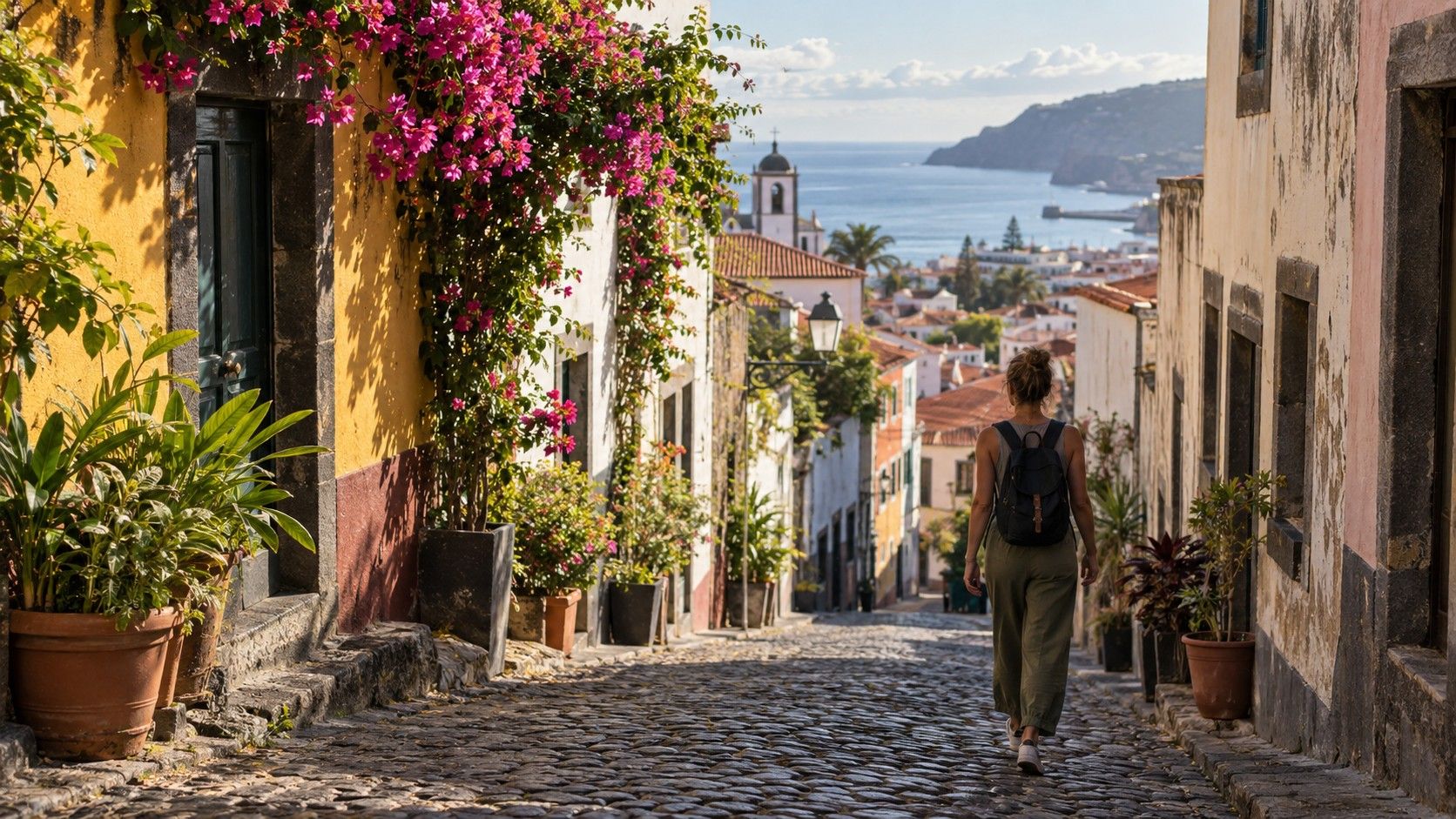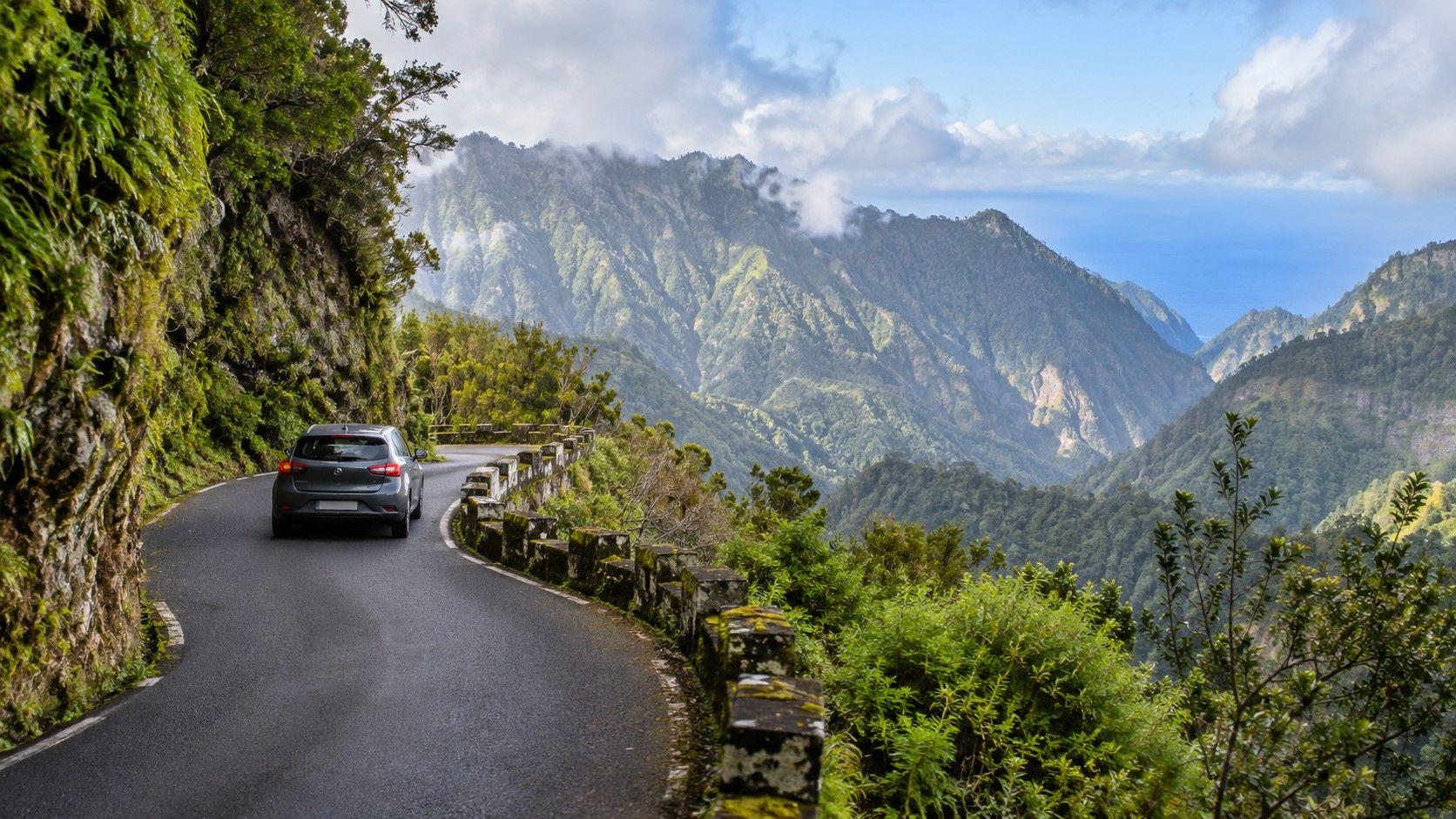
A Madeira first trip itinerary goes wrong when it treats a small island as a short island. The map makes Funchal, Pico do Arieiro and Porto Moniz look like neat pins; the road, parking, cloud and steepness put space back between them. A good first visit has a shape, but it also has a spare day and the nerve to swap Tuesday with Thursday.
Choose the number of nights before choosing the sights
Four nights can give you Funchal and two carefully chosen outings, provided you accept that some corners stay unseen. Five or six nights is the practical middle ground: one arrival evening, three proper island days, a flexible weather day, and a departure day that is not being asked to carry a mountain hike. Seven nights gives the rhythm room to breathe, especially if you want a levada walk and time to sit in a coastal town without watching the clock.
Arrival day is usually poor material for ambition. Between the airport near Santa Cruz, the transfer, collecting a car and a hotel check-in, even Machico can feel farther away than expected. Use it for a waterfront walk in Funchal, a short look around the old town, and supplies for the morning. The first full day then begins with a clear head rather than a suitcase still on the floor.
Put weather-sensitive days in the right place
Pico do Arieiro belongs early in the trip, not because a sunrise is compulsory, but because high ground is the easiest plan to lose to cloud or wind. Check conditions in the morning and go when the ridge has a usable window. If it is shut in, do not spend two hours driving upward merely to prove the reservation calendar right. Keep the mountain day movable and replace it with Funchal, Câmara de Lobos, or a south-coast stop.
The north coast also deserves a weather check, though for a different reason. Porto Moniz pools, São Vicente and the road across the plateau are far more enjoyable when you can see their edges. A grey morning in Funchal does not automatically mean rain in the west, while a bright south coast can coexist with low cloud over Paul da Serra. The point is not forecasting mastery; it is refusing to give one app icon authority over the whole island.
Build an east-to-west rhythm instead of a zigzag
On the first full day, stay close to Funchal and the east. Monte, the cable-car area, the market streets and a drive or bus toward Machico make a sensible introduction because they do not demand a cross-island return in the dark. Machico gives a gentler shoreline than central Funchal and works well after a flight, when a long viewpoint circuit would be theatre rather than pleasure.
Give the west a full day rather than squeezing it behind a museum morning. A route through Ribeira Brava, São Vicente or Encumeada, then toward Seixal and Porto Moniz, has many tempting pauses and several roads that punish haste. It is better to choose two or three stops and reach them with daylight than to collect six names and spend the final hour looking for a parking space. Return routes through tunnels can be fast, but they are not a promise when weather or traffic changes the mood.
| Trip length | A workable rhythm | What to leave out |
|---|---|---|
| 4 nights | Funchal, one mountain-or-east day, one west-or-levada day | Trying to cover both coasts in detail |
| 5–6 nights | Funchal, east, west, mountains, flexible day | Stacking two long drives on one day |
| 7 nights | Separate walking day and slow coastal day | Using every spare morning for another viewpoint |
Keep one flexible day on purpose
A weather buffer is not an empty day waiting for a failure. It is the day that protects the rest of the Madeira itinerary. If a high route clears, it becomes Pico do Arieiro or a walk with an exposed section. If rain sits over the plateau, it can become Funchal gardens, a long lunch in Câmara de Lobos, or a drive along the sunnier south coast. Those are different days, yet each makes sense without an apologetic footnote.
Put this day after you have sampled the island, rather than on the final morning. By day three you know whether you enjoy hairpin roads, whether the north feels too damp for your taste, and whether a planned hike needs more than the spare trainers in your case. You also have enough local observations to choose between returning to a place you liked and chasing a famous view you may only half see.
Common itinerary mistakes that make the island feel smaller
The most common mistake is treating a viewpoint as a ten-minute stop. The drive may be slow, the lot may be full, and the walk from the car can take longer than the map suggests. Another is booking every evening in a different town. Madeira rewards a stable base because changing rooms steals time and makes weather swaps awkward. Funchal is a practical first base; it does not require you to love cities, only to value restaurants, services and an easy first night.
A second mistake is planning the west and Pico do Arieiro on consecutive dawns. The schedule looks efficient until fatigue meets a narrow road and low cloud. Leave a late breakfast, a short waterfront hour, or nothing at all between the long days. How many days in Madeira is enough depends less on the count than on whether those days retain a margin for the island to interrupt you.
There is a useful difference between seeing an island and understanding its daily scale. A week with one unplanned afternoon can still include the headline landscapes, but it lets a café stop in São Vicente become more than a bathroom break and lets a clear evening change the next morning’s route. Keep fuel, food and a light layer close, because an itinerary with options works best when it does not require a return to the hotel whenever conditions change. That ordinary preparation makes a flexible Madeira trip feel deliberate rather than improvised.
Make the final evening intentionally local. A walk near the base, an early meal and a look at the next morning’s weather create a calmer departure than one last cross-island drive. The itinerary has done its work when it leaves a few places for another visit, rather than reducing every day to a race between car parks. Madeira is at its best when the plan has enough slack to notice where you are.