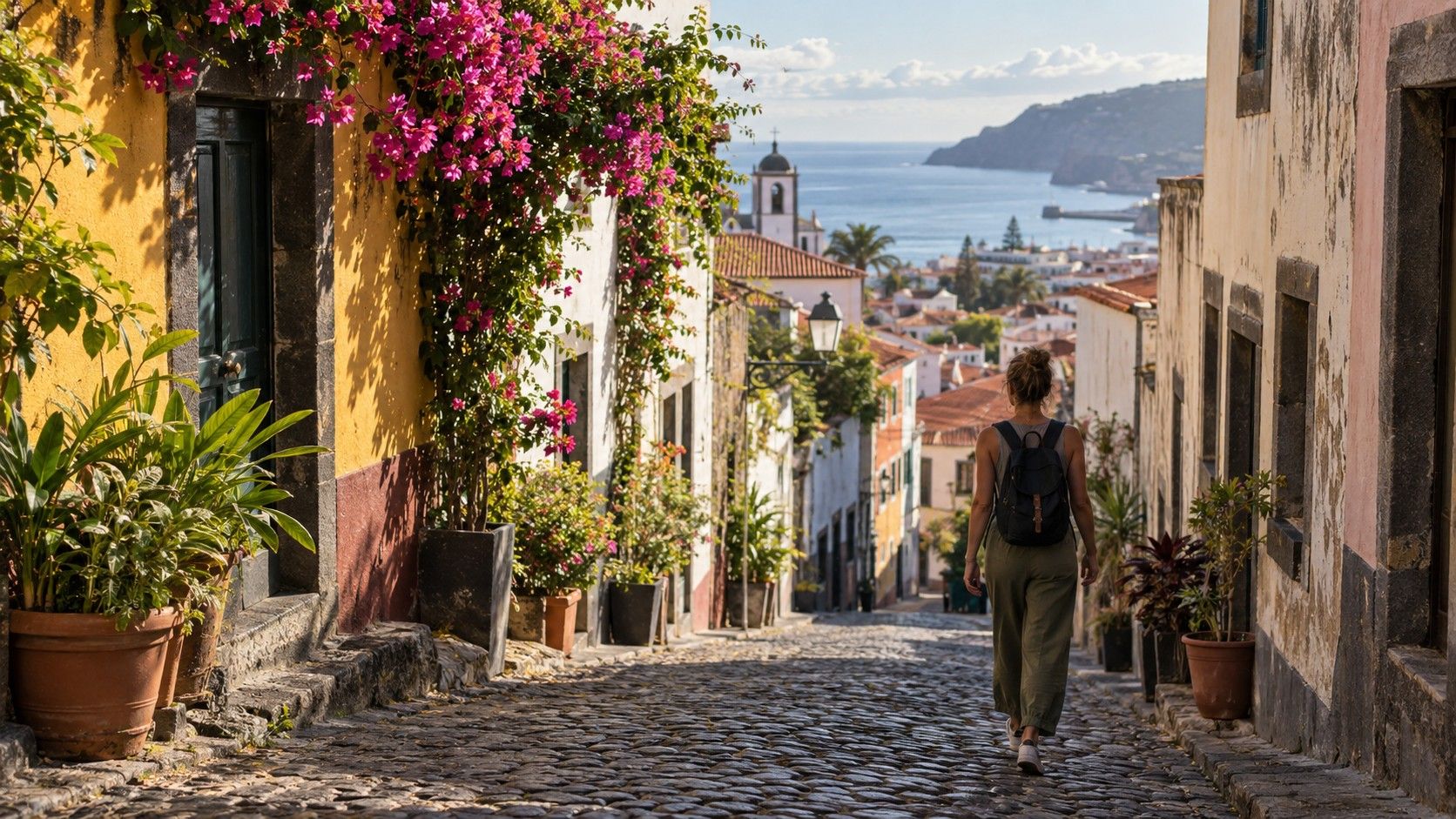
Madeira food is easiest to enjoy when you stop looking for one definitive list of dishes and start noticing how meals are put together. A grilled skewer, warm bread, a fish plate and a fruit drink can appear in very different settings: a simple lunch room, a Funchal dining street, or a coastal stop after a walk. Ordering well is mostly about portions, timing and asking one ordinary question before the food arrives.
Begin with the everyday classics, not a grand tasting mission
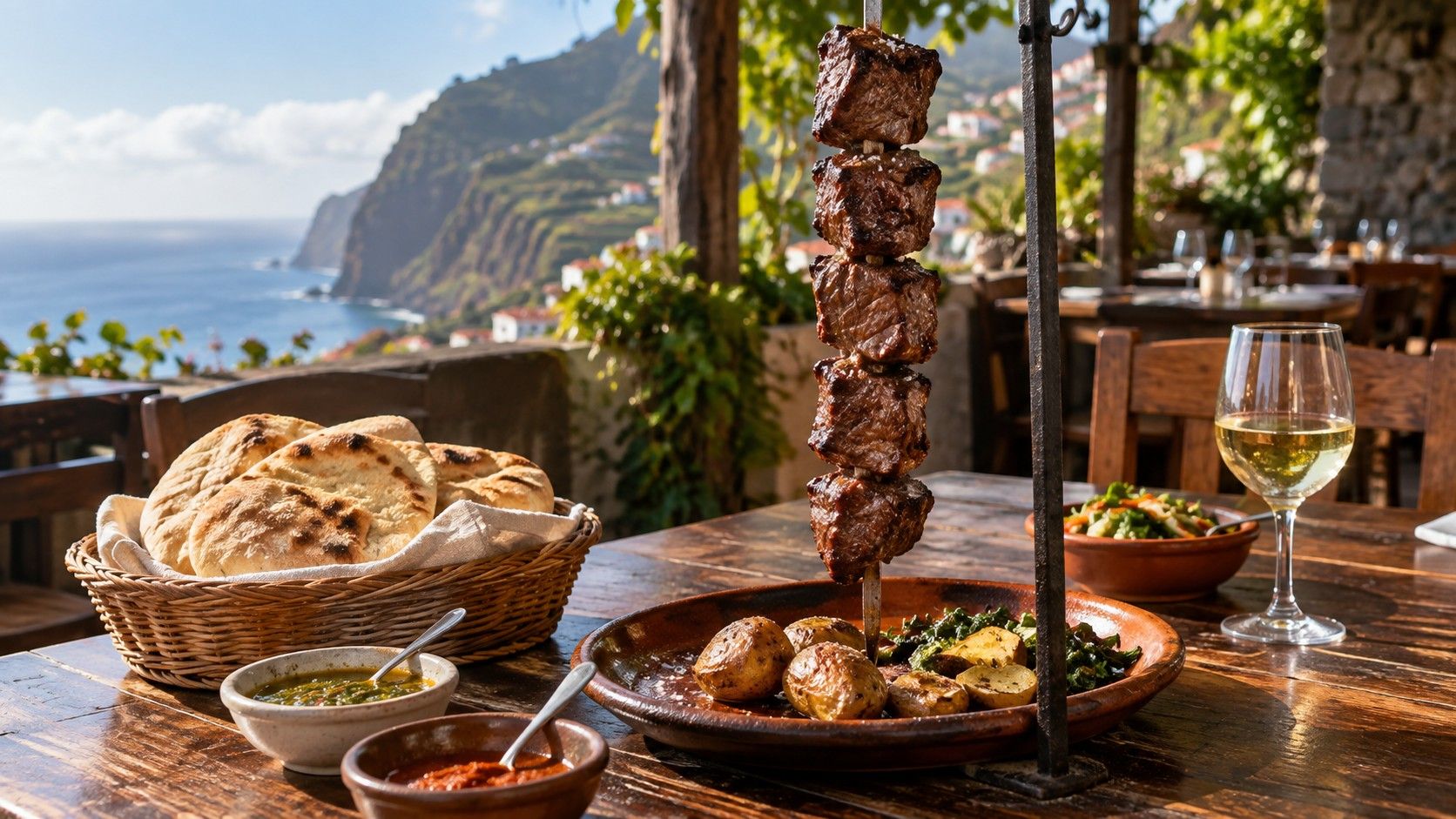
Bolo do caco is a good place to start because it explains the island’s preference for food that is simple but satisfying. The flat, soft bread is often served warm with garlic butter, and it can be a snack, a side, or the base of a sandwich. It is easy to order too much if it arrives before a substantial meal, so treat it as part of the table rather than a harmless prelude. A shared portion makes more sense for most lunches.
Soup, grilled meat, salad and potatoes are common anchors of a local meal. The difference is less about hunting an exotic ingredient than accepting that a good meal may be direct and generously portioned. If you want to try several Madeira local dishes in one day, split them across lunch and dinner. A heavy espetada lunch followed by more grilled food at night is memorable only in the least useful sense.
Seasonality is worth asking about, particularly with fruit and fish. A menu may present a familiar item, but the best choice can be what arrived locally that day. Ask what is fresh and how the serving is prepared. This is better than asking staff to validate a long online recommendation list, and it leaves room for regional variation between a central Funchal restaurant and a smaller coastal kitchen.
Understand how an espetada meal is structured
Espetada is beef grilled on a skewer, often served hanging vertically at the table. The presentation can make it look like an individual challenge, though the practical question is the portion size and the sides. Ask whether the listed serving is for one person, whether bread and potatoes are separate, and whether the kitchen can bring an extra plate if you plan to share. Those small details prevent a relaxed dinner from becoming a negotiation with a cooling skewer.
Do not confuse the theatrical hook with a guarantee of tenderness. Grilling style, cut and timing vary. If you like beef cooked a particular way, say so politely, but accept that a busy grill may have its own rhythm. Espetada is often best after a day outside, when a hearty meal feels earned; it is less appealing as a rushed snack between cable cars and a late-night walk.
In Camara de Lobos, food and drink often fit naturally into a coastal stop, yet that does not mean every visitor needs to turn lunch into a full afternoon event. Have a clear plan for driving afterwards, especially if your day includes a rental car and mountain roads. Madeira travel becomes much easier when you separate a tasting from the person responsible for getting everyone back to the hotel.
Choose fish and limpets with coastal timing in mind
Fish is one of the clearest answers to what to eat in Madeira, but it deserves a little flexibility. Ask what the kitchen has and whether it is grilled, fried or served with a sauce. A whole fish can be a generous order for one person, while a fillet makes sharing less practical. If you do not enjoy bones, say so before ordering rather than discovering the format halfway through a hungry conversation.
Limpets, often served hot with garlic and butter, are better approached as a shared starter than a test of how adventurous you are. Their texture is distinctive and the flavour depends heavily on the preparation. Order one portion for the table, then decide whether you want more. A seaside table is appealing, but wind and a late arrival can make hot plates cool quickly; choose the food when you are ready to sit rather than when the view first catches your attention.
| Dish or drink | Good moment to order | Useful question |
|---|---|---|
| Bolo do caco | Shared starter or simple lunch | Is it a full portion for the table? |
| Espetada | A relaxed dinner after an active day | What sides are included, and can it be shared? |
| Fish or limpets | Coastal lunch with time to linger | What is fresh today and how is it served? |
| Poncha | One considered drink when transport is settled | How strong is this house version? |
Keep poncha in proportion
Poncha is part of Madeira food culture, usually built around citrus, sugar or honey, and aguardente. Recipes and strength vary, so the sensible expectation is not that it tastes like a mild fruit juice. If you want to try it, order when you have already decided how you are getting home. One drink with a meal or a pause in Camara de Lobos can be pleasant; several because the first tastes sweet is a poor travel strategy.
There are non-alcoholic pleasures worth giving equal attention: coffee, fresh fruit, pastry and a slow lunch after a wet levada walk. No visitor needs to drink poncha to understand the island. If alcohol is not for you, simply choose another local refreshment and keep the conversation on the meal rather than the performance of trying everything.
Order without turning dinner into research
Menus are useful, but a short conversation is often more useful. Ask about portion size, the day’s fish, and whether a dish is spicy, salty or designed to share. Then make a decision. Chasing the most ‘authentic’ version of every item can make dinner feel like an assignment and can leave you too full to enjoy the evening streets of Funchal.
A balanced approach is to choose one recognisable classic, one item you would not cook at home, and something simple on the side. Split a large serving if the table agrees, save room for dessert only if you genuinely want it, and let the restaurant’s pace be part of the evening. Madeira local dishes make more sense in that ordinary rhythm: warm bread first, a proper plate next, and no need to prove anything by the time the bill arrives.