Madeira weather by region matters more than the weather icon attached to your hotel. The island rises sharply from the Atlantic, catches trade winds, and puts a mountain barrier between coasts that can be experiencing different days. A practical plan does not hunt for perfect conditions; it learns to match a clear patch with the right part of the island and keeps a dry alternative close by.
Why one forecast is never enough
A forecast for Funchal is useful for Funchal, and then its authority fades as the road climbs. It may be bright on the south coast while Santana has low cloud, or damp in town while a westward drive reaches a clearer afternoon. Check more than one regional reading, look at the direction and height of cloud, and use the view from your accommodation as one piece of evidence. The screen tells you probabilities; the mountain tells you whether your intended walk still makes sense.
The mistake is treating a rain symbol as a cancellation notice. On Madeira, a shower can be local and short, while a blanket of cloud over the high ground may persist for hours. Use the forecast to decide between exposed ridges, sheltered gardens, a coastal town and a museum morning. The useful question is not ‘will it rain on Madeira?’ but ‘where will being outside feel good for the next four hours?’
South coast versus north coast
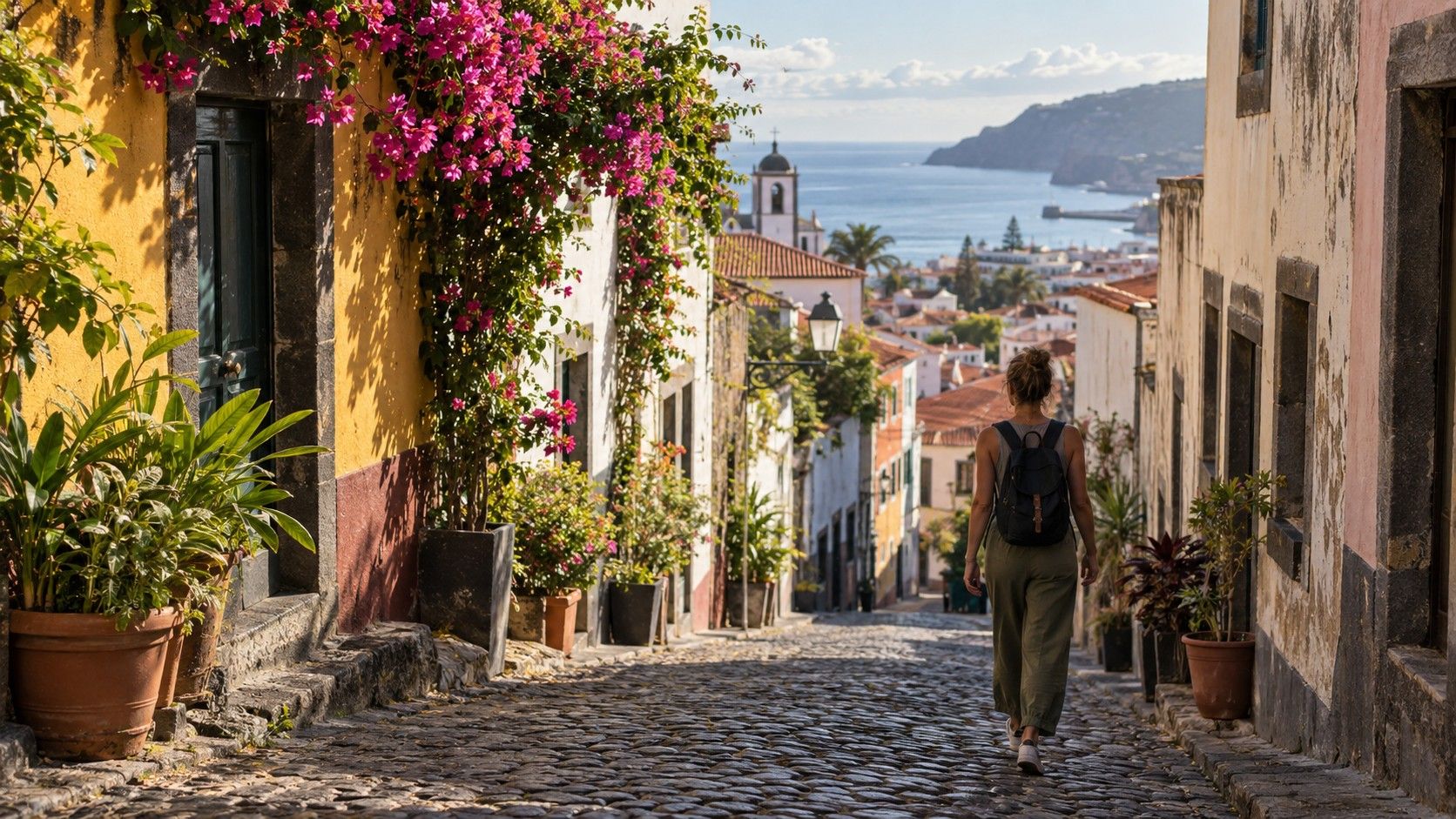
Funchal, Ponta do Sol and much of the south coast often offer the gentler option when cloud gathers inland, which is why a south-coast base feels reassuring to many first-time visitors. That pattern is a preference, not a contract. Wind can make a waterfront feel cool and rain can arrive anywhere. Bring a light waterproof layer even on a warm-looking day, because a stop above the coast can be markedly cooler than the café where you began.
The north coast around São Vicente, Seixal and Porto Moniz has a different mood: greener, more exposed to Atlantic weather, and often more changeable through a single drive. It can be clear and magnificent while Funchal is dull, so do not reject it from a city forecast alone. But if a wet front has settled in, choose fewer stops and avoid making a long west day depend on a single viewpoint. The coast is still there; it does not need to be conquered on the least inviting morning.
Mountain cloud and wind need a separate decision
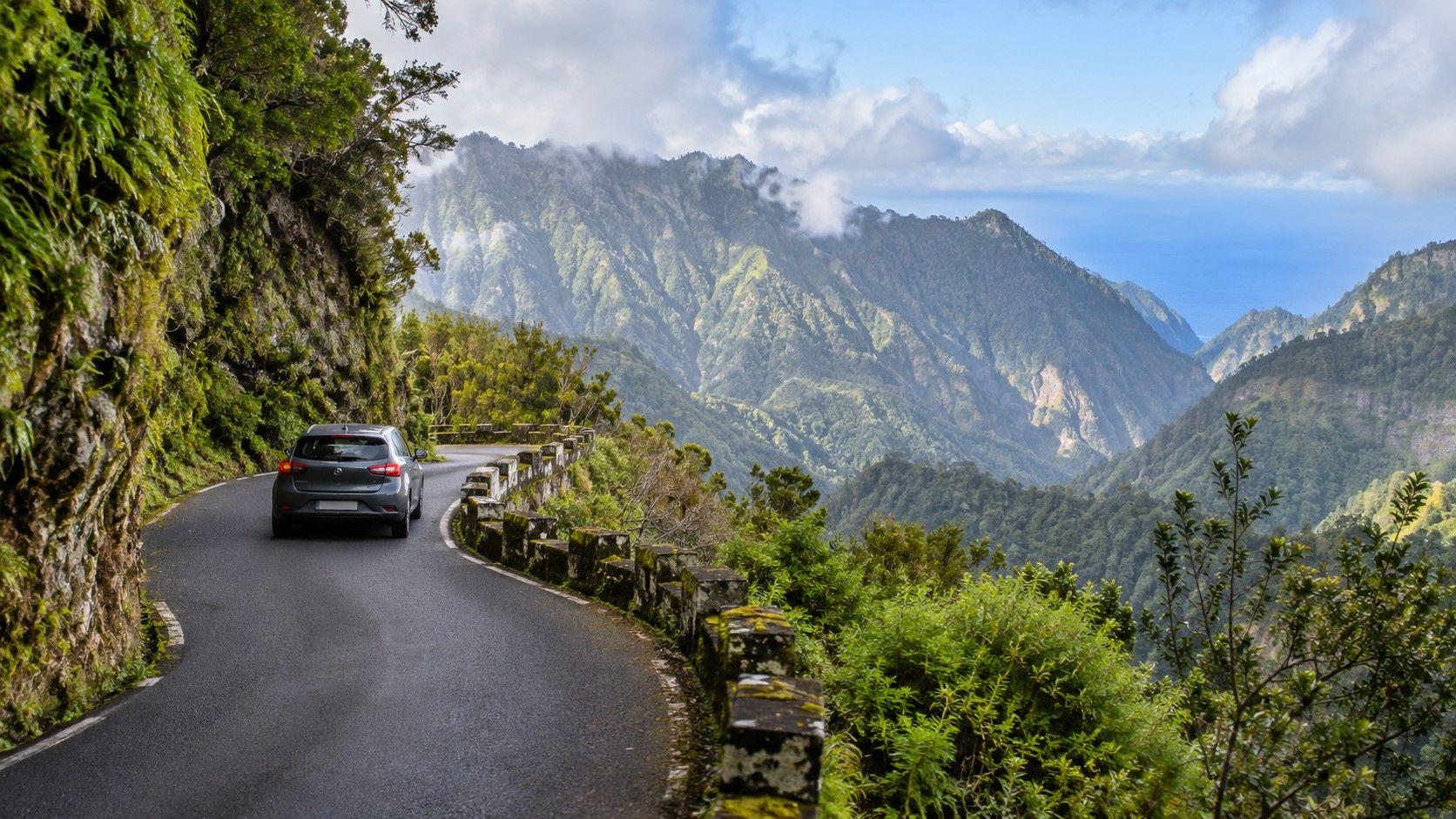
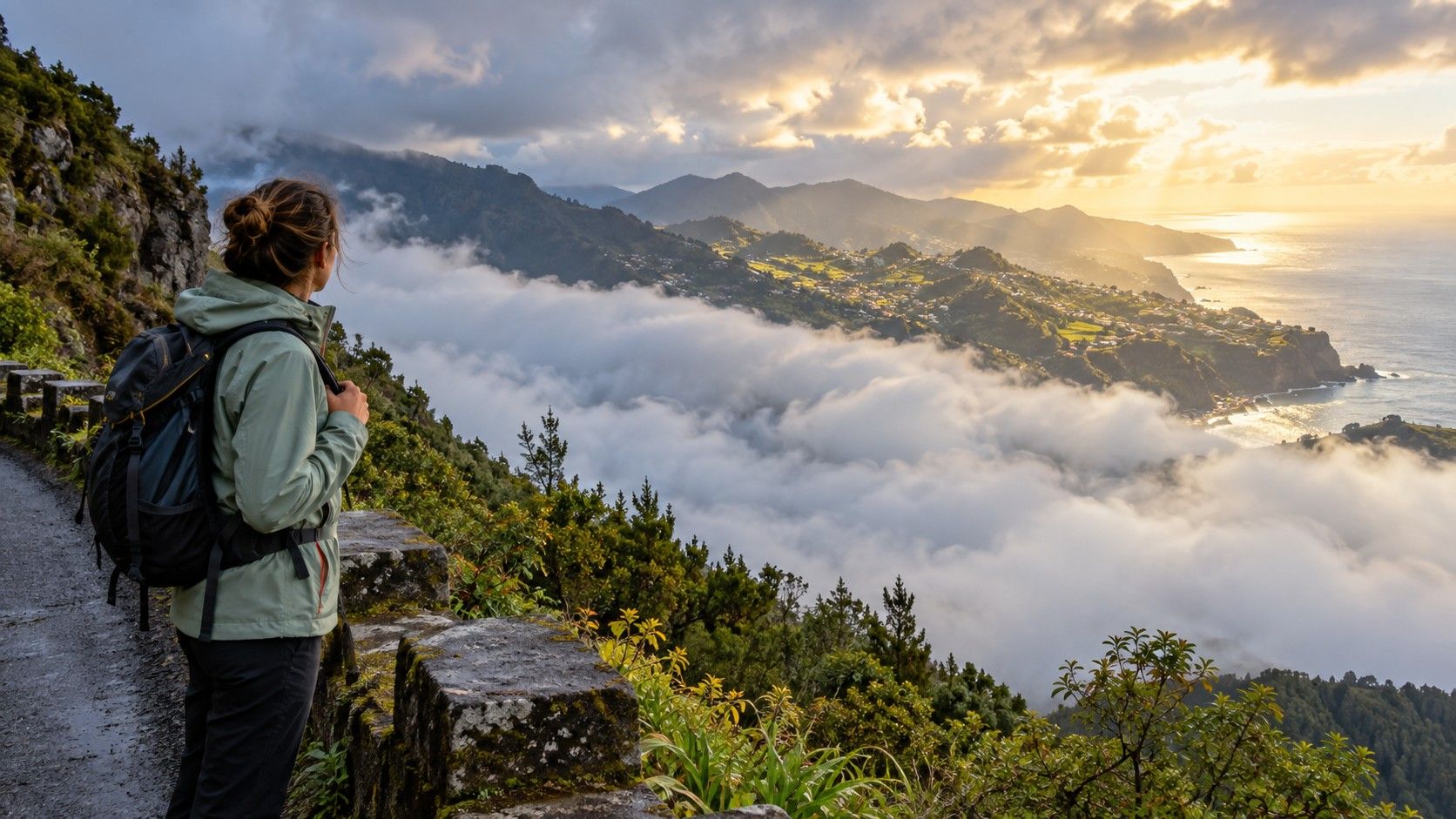
Paul da Serra, Pico do Arieiro and higher levada routes occupy their own weather zone. The cloud line can sit below an elevated road, around it, or above it; a clear start does not guarantee an exposed afternoon. Wind is just as important as rain on ridges. It can make a viewpoint unpleasant, change the temperature quickly and reduce the sensible margin on a walk. Pack a warm layer in the car even if the south coast is behaving like summer.
For a mountain plan, check conditions twice: once the evening before, then again before departure. If the second look is poor, do not cling to the original schedule because it was written neatly in a notes app. Shift the hike to the flexible day and take a low-level route instead. That small discipline is the difference between using Madeira microclimates intelligently and becoming a passenger in a damp, expensive drive.
| Conditions you see | Often worth considering | What to avoid assuming |
|---|---|---|
| Cloud over high ground, clearer south | Funchal, Ponta do Sol, coastal walks | That a ridge will clear by arrival |
| Bright Funchal, north-coast rain | South or east-coast day | That Porto Moniz will match the city |
| Strong wind on the plateau | Low-level town or garden day | That no rain means comfortable hiking |
| Short local shower | Delayed start and nearby activity | That the entire island is washed out |
A practical morning decision routine
Begin with the destination rather than your hotel window. Check the forecast for the coast or mountain you actually plan to visit, then look at cloud movement and wind. Make breakfast while you decide between two plans, not one. Plan A might be an exposed walk or a long west-coast drive; Plan B might be Funchal, Monte, Machico or a south-coast outing. Both should be things you would gladly do, not a punishment for bad luck.
Leave early enough to change your mind without losing the entire day. On a drive toward the mountains, stop at a lower viewpoint before committing to the final climb. If visibility is gone, turn the decision into a route change rather than a debate inside the car. This routine takes minutes and saves hours. It also prevents the familiar travel error of spending a day staring at fog because the itinerary demanded a famous name.
Weather-safe alternatives still feel like Madeira
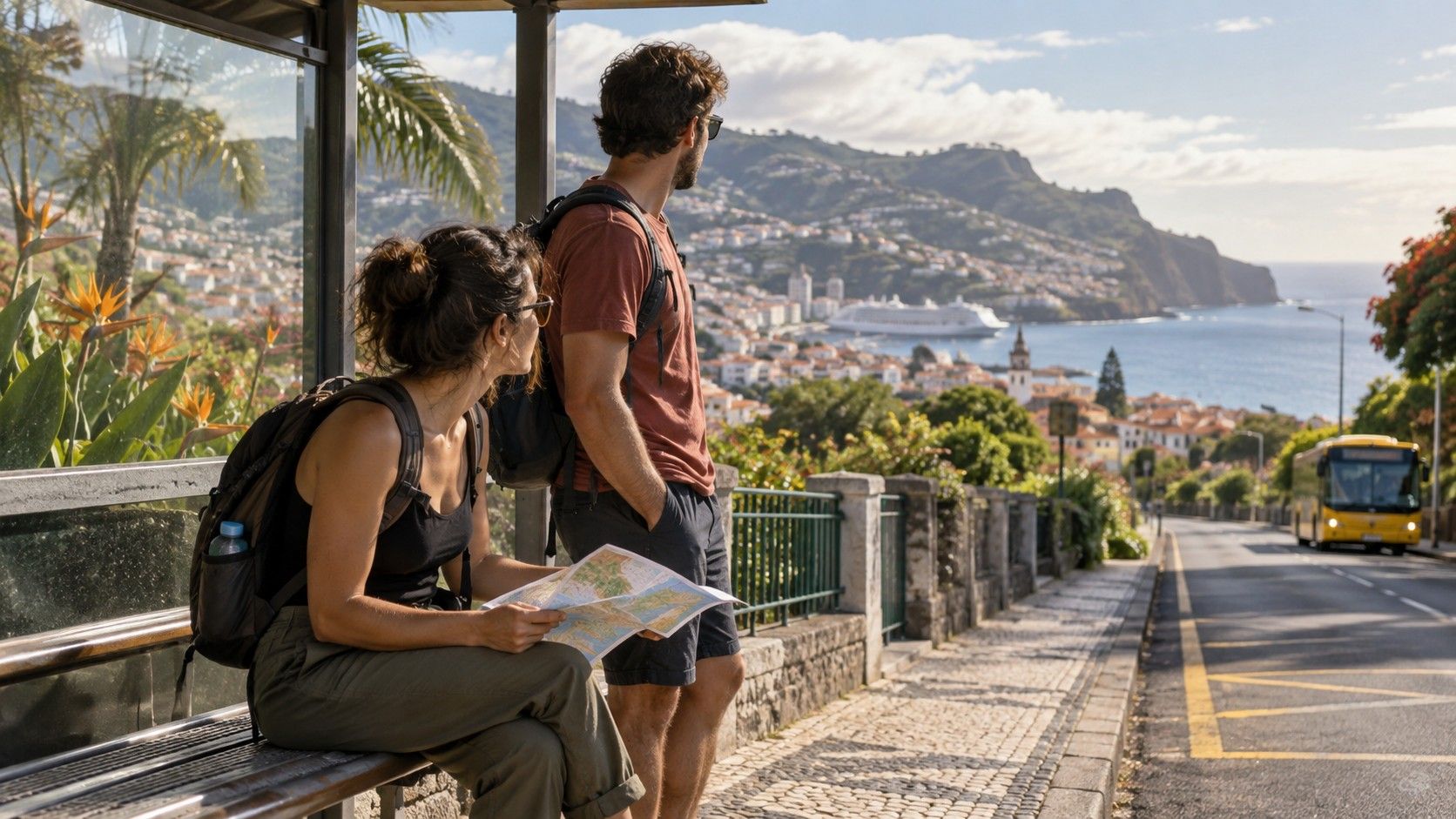
Funchal is the obvious fallback, but it is not a consolation prize. Gardens, the old town, market streets, cafés and the cable-car area can fill a wet or windy morning without logistical strain. Monte can work when the weather is merely mixed, though it also has its own cloud risk. Machico offers an easier eastern coastal day and a flatter waterfront. The best alternative depends on where the weather is actually behaving, not on a rigid list of rainy-day attractions.
On a longer stay, repeat a place when conditions improve. A first visit to Porto Moniz in drizzle might show you its practical side; a later clear afternoon changes the entire impression. Keeping one unscheduled day is therefore part of a weather plan, not laziness. Madeira rain forecast tools are useful, but the island rewards a visitor who treats them as a starting signal, then chooses with eyes open and a second route in mind.
Pack for variation rather than for a single season: shoes that cope with damp ground, a layer that earns its space on a windy plateau, and sun protection for a sudden clear south-coast break. Keep the day’s route light enough to reverse, because the best weather decision is often made at a junction rather than at breakfast. When cloud, wind and showers are treated as useful information, Madeira’s shifting conditions stop feeling like an interruption and become part of the way the island is explored.