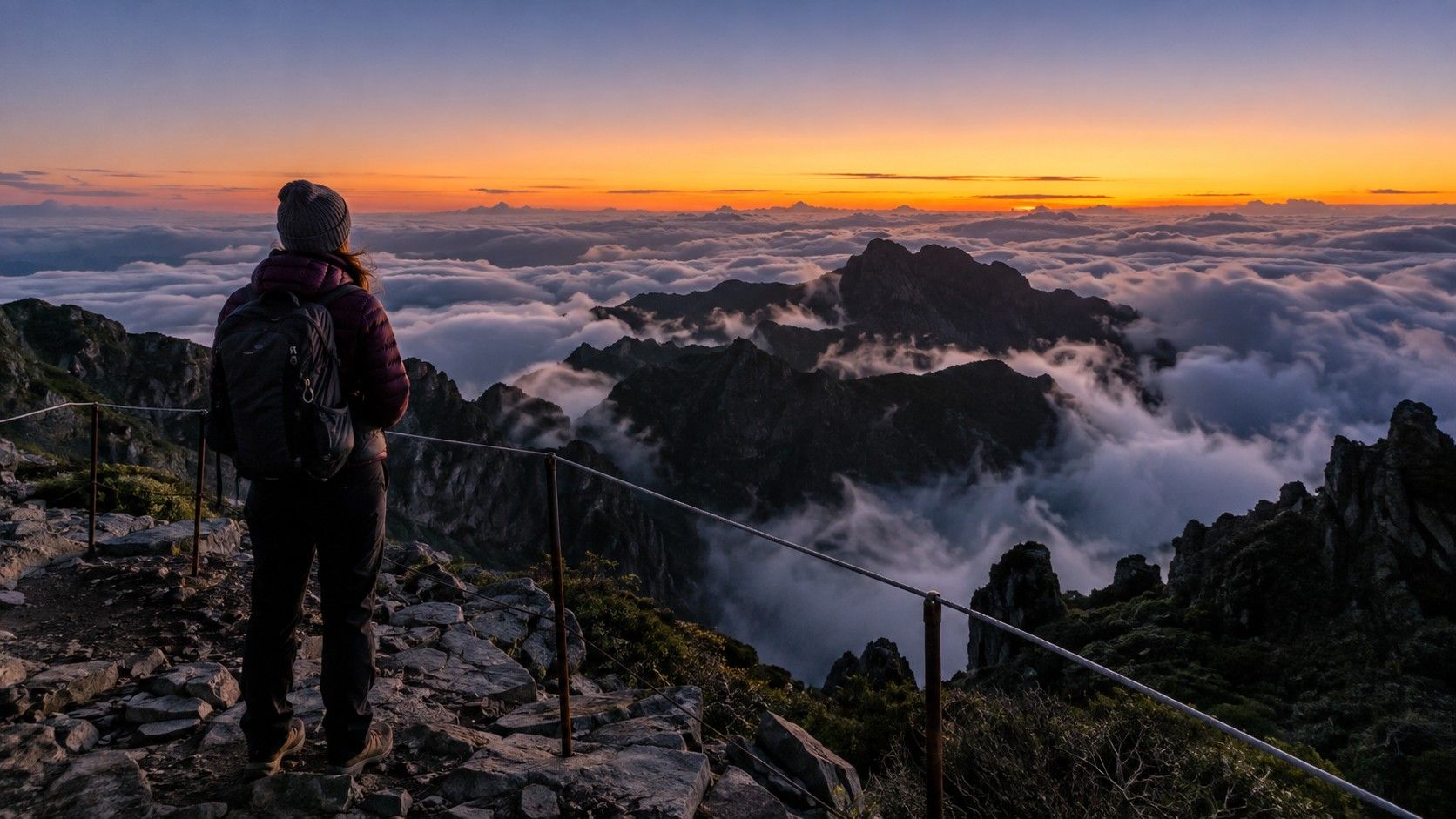
Pico do Arieiro sunrise is a beautiful idea with an awkward practical side: you leave a warm bed in Funchal for a mountain that may be windy, fully clouded, or clear above a cloud layer for only a few minutes. The useful plan is not built around a guaranteed view. It is built around arriving calmly, dressing for the ridge, and knowing what you will do with the morning if the mountain gives you nothing but fog.
Decide whether the early start suits this particular trip
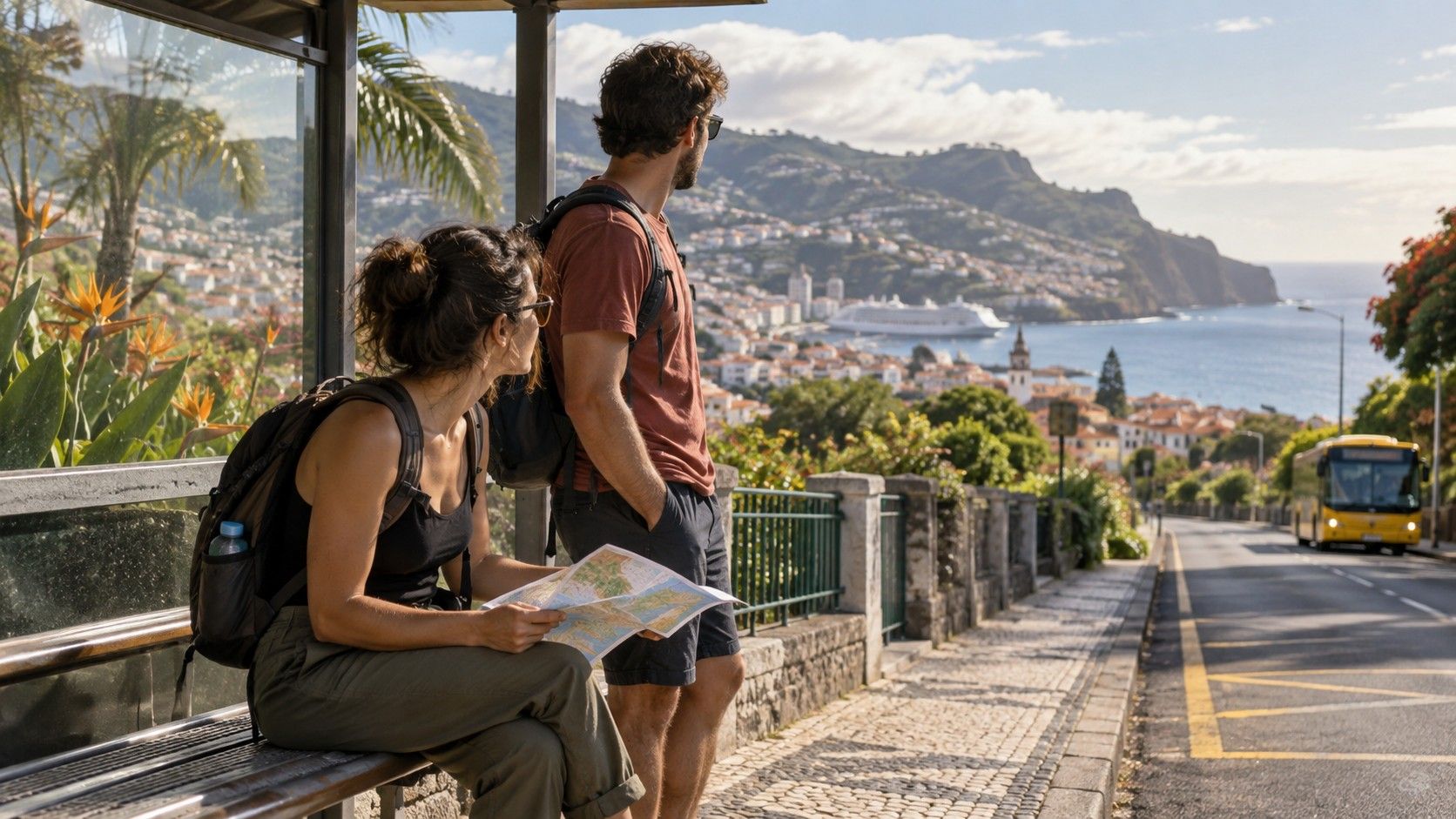
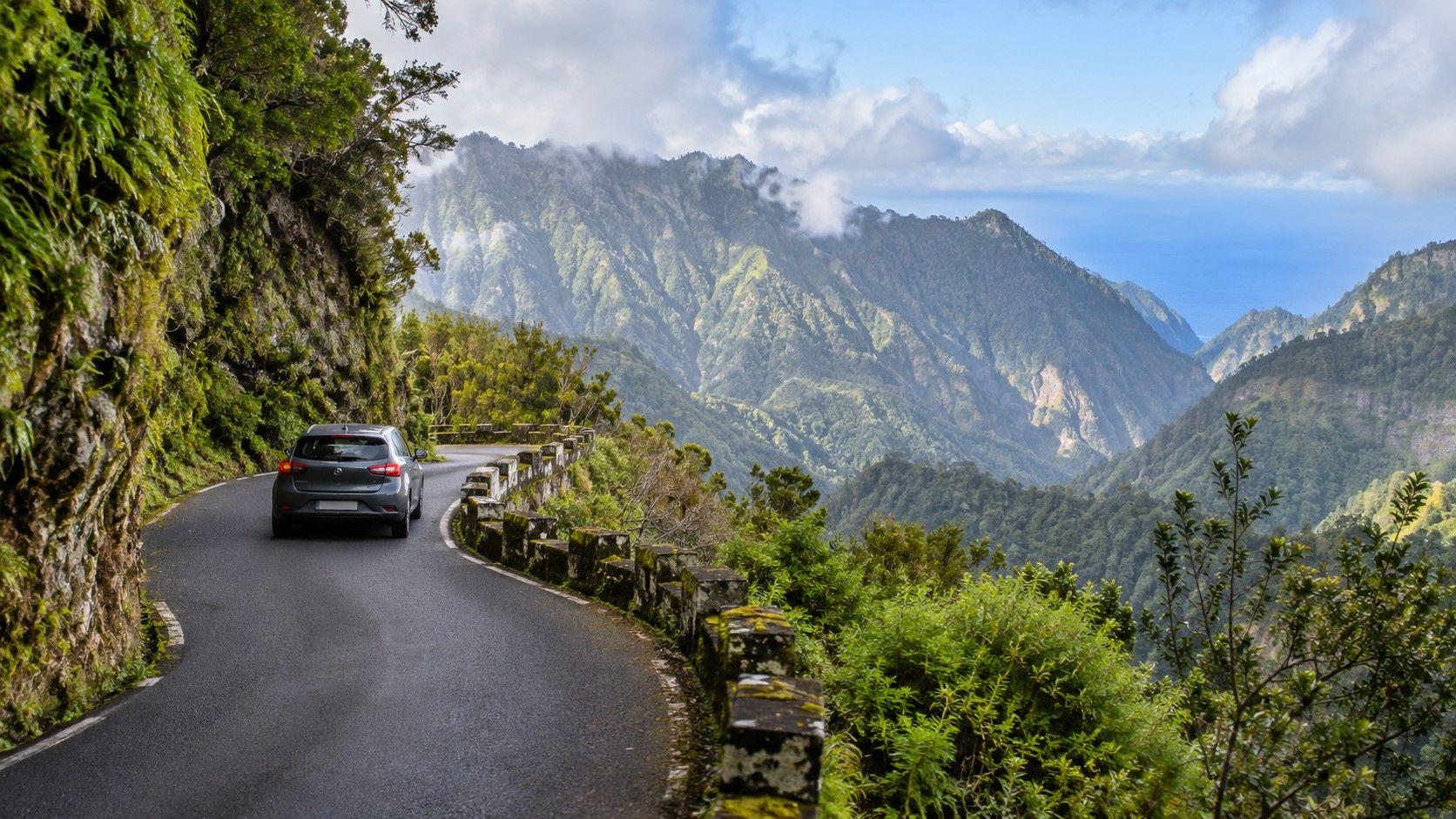
A sunrise visit asks for more than an alarm. The drive from Funchal climbs through changing conditions, and the final temperature can feel several degrees colder than the coast. If you have a rental car, the journey is manageable when everyone is alert and the driver is comfortable with darkness and bends. If that already sounds tiring, reserve the mountain for a daylight visit and use a lower viewpoint for an easier morning.
It helps to set a personal reason for going. Some people want a short lookout visit and a coffee afterwards; others hope to begin a Madeira sunrise hike. Those are different days. A lookout plan can absorb a disappointing sky and still leave time for breakfast. A hiking plan needs more daylight, more water, and a clearer decision about route access than a social-media photograph ever shows. Avoid treating the sunrise as the starting gun for Pico Ruivo unless current information supports the route you intend to use.
Read cloud and wind as separate problems
Pico do Arieiro weather is often reduced to a single icon, which is not enough. Low cloud can cover the viewpoint while the coast is dry; a cloud layer below the summit can make the mountain feel open; high cloud can soften the sunrise even when visibility is fine. Look at forecasts by altitude and close to departure, then accept that the ridge has its own mood. The forecast narrows the odds; it does not create a contract.
Wind is the detail that changes comfort fastest. A still car park can lead to a sharp gust on an exposed path, and damp air makes a thin jacket feel less useful than expected. Bring a windproof outer layer, a warm mid-layer, and something for hands if you cool quickly. Wear shoes that can cope with wet stone even if you only plan to stand near the viewpoint. The ground around popular spots is often slick with condensation and foot traffic.
Do not judge the morning from the sky above Funchal. Check again near Poiso and be willing to alter the plan before you commit to the last climb. A grey ridge is not dangerous by itself, but poor visibility, strong wind, and tired people are a poor combination for an unfamiliar mountain path. The right response is often a shorter visit, not a stubborn attempt to recover the ‘perfect’ version of the day.
Arrive early enough to avoid a parking scramble
At sunrise, parking arrival affects the whole tone. Aim to be settled with time to put on layers, use a torch if needed, and walk to the viewing area without crossing a busy car park half asleep. There may be more people than a first-time visitor expects, especially in seasons with long clear mornings. Leave room for a slower drive, a wrong turn, or a early plan stop to check the weather; arriving exactly at sunrise is a stressful way to begin.
Keep valuables out of sight before you leave the vehicle and use a small bag rather than loose items in your hands. A thermos can be pleasant, but remember that cold fingers, wind and crowded railings make elaborate breakfast setups annoying. The simplest useful kit is water, a snack, headlamp, warm layer, phone with charge, and a saved map. If you are with friends, agree on a meeting point before separating for photographs.
| Morning condition | Sensible response | What not to assume |
|---|---|---|
| Clear but windy | Stay warm, keep the visit short, use sheltered pauses | That a ridge walk will feel equally comfortable |
| Cloud at the viewpoint | Wait briefly, then move to the backup plan | That the view will open on a schedule |
| Rain or very poor visibility | Skip exposed walking and descend deliberately | That sunrise crowds make conditions safer |
If the ridge is closed or conditions are poor
Route closures and restrictions are practical information, not an invitation to search for an unofficial workaround. Check the current official notice shortly before leaving, and if the route is unavailable, treat the lookout visit and any hiking plan separately. A closed ridge does not make the whole morning wasted; it means the mountain has become a viewpoint rather than a trail day.
Curral das Freiras is a useful direction for a lower-altitude change of scene when the high ridge is unfriendly, provided the roads and weather make sense for your drive. You can also turn the morning into a gradual descent through villages, stopping for breakfast only after the pressure to ‘catch’ sunrise has gone. That flexibility is more satisfying than sitting in a parked car refreshing a forecast.
Build a lower-altitude morning you would enjoy anyway
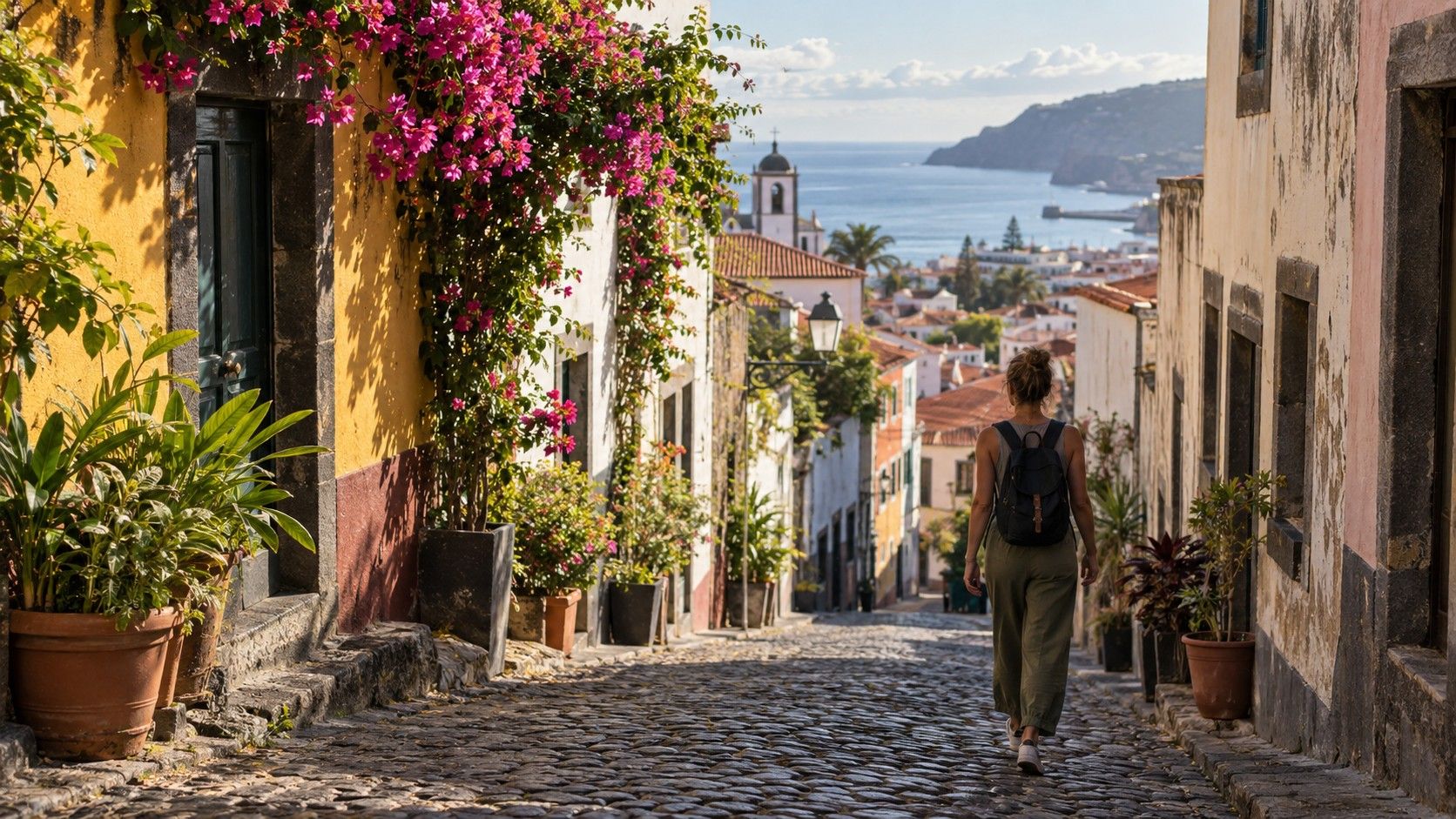
The backup plan should be attractive enough that you do not resent using it. Start with breakfast in Funchal after an early weather check, then choose a coastal walk, a slower old-town morning, or a drive toward a viewpoint where the wind is less exposed. If cloud sits high, you may still see good light changing across the sea without the cold ridge and the pre-dawn logistics.
Keep the mountain kit in the car for another day rather than forcing an unsuitable visit. Pico do Arieiro rewards patience more than bravado. A sunrise can be a fine part of Madeira travel, but it should remain one option within a week of weather-aware decisions, not the single moment that determines whether the trip feels successful.
Descend with the same attention you used on arrival
After sunrise, people often relax too quickly. The driver has still been awake for hours, the car park may be busy, and wet bends remain wet in daylight. Warm up before leaving, clear the windows properly, and take a quiet minute away from the crowd before starting downhill. If someone is cold or feels unwell, solve that before the descent rather than hoping a fast drive will fix it.
Do not make a ridge-walk decision merely because the first light improved. Recheck conditions and current access information, then compare that with the group’s energy. A viewpoint visit and a route toward Pico Ruivo are separate commitments. It is entirely sensible to descend for breakfast and select a lower walk later. That discipline keeps one mountain morning in proportion to the rest of the island trip.